
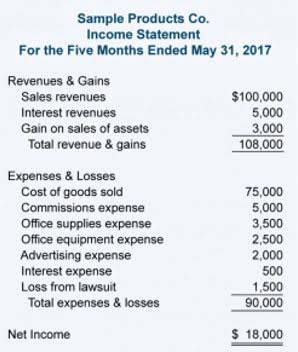
Balancing retained earnings and contributed capital is a nuanced task that requires a deep understanding of a company’s financial strategy and the expectations of its shareholders. Retained earnings represent the portion of net income that is held back in the company to reinvest in core business operations or to pay down debt. Contributed capital, on the other hand, is the total value of the cash and other assets that shareholders have given a company in exchange for stock. The interplay between these two elements is critical because it reflects the company’s past decisions and future commitments. On one side, investors may view a large retained earnings balance as a sign that the company has ample funds to invest in growth opportunities or weather economic downturns.

Journal Entry for Retained Earnings
- It serves as the company’s financial foundation, helping to cover startup costs, acquire assets, and fund day-to-day operations.
- From the perspective of a CFO, the challenge lies in optimizing the use of retained earnings to support company growth while maintaining enough liquidity to cover operational needs and unexpected expenses.
- Equity can fluctuate based on various factors such as profits, losses, and dividends.
- For example, you might wish to create a retained earnings account inorder to save up for some new equipment or a vehicle, which is also known as capital expenditure.
- This can lead to more aggressive growth strategies and potentially higher returns for shareholders.
To get a better understanding of what retained earnings can tell you, the following options broadly cover all possible uses that a company can make of its surplus money. For instance, the first option leads to the earnings money going out Record Keeping for Small Business of the books and accounts of the business forever because dividend payments are irreversible. Effective expense management involves monitoring and controlling costs to ensure the business remains profitable. By analyzing expense accounts, businesses can identify areas where they can reduce costs or optimize spending.

Management and Retained Earnings
- To start with, do not make the mistake of believing that the retained earnings are the same as the bank balance of the business.
- In the realm of bond investments, the metric known as cash flow yield stands as a pivotal…
- These categories, including assets, liabilities, equity, revenues, and expenses, help in organizing financial data systematically.
- Equity represents the owner’s interest in the business, calculated as the difference between assets and liabilities.
- This can be in the form of common stock, preferred stock, or other equity instruments.
When a company pays dividends to its shareholders, it reduces its retained earnings by the amount of dividends paid. For instance, if a company generates a net income of $50,000 during the accounting period, it would be added to the beginning retained earnings. If the company incurs a net loss of $20,000, it would be subtracted from the beginning retained earnings. A portion of the RE balance may be legally or contractually restricted, a concept known as appropriated retained earnings. This appropriation limits the amount of earned capital that can be used for discretionary purposes, such as paying dividends or repurchasing stock.
What are expenses?
They represent the accumulated profits a company has retained after paying all expenses and dividends. It’s a key indicator of the company’s financial strength and its ability to reinvest in future growth. Reporting and disclosing retained earnings is a pivotal aspect of understanding the financial health of a company. It’s a component that lies at the heart of contributed capital, representing the portion of profits a company has held onto over time rather than distributing them to shareholders in the form of dividends. This practice of retaining earnings can serve various purposes, such as reinvesting in the business, paying down debt, or weathering economic downturns. It’s crucial to delve into the intricacies of how retained earnings are reported and disclosed, as it provides stakeholders with valuable insights into a company’s financial strategy and performance.
Retained earnings offer internally generated capital to finance projects, allowing for efficient value creation by profitable companies. However, note that the above calculation is indicative of the value created with respect to the use of retained earnings only, and it does not indicate the overall value created by the company. In the long run, such initiatives may lead to better returns for company shareholders, rather than those gained from dividend payouts. Paying off high-interest debt also may be preferred by both unearned revenue management and shareholders, instead of dividend payments. Retained earnings are the earnings left over and kept by a company after paying all current obligations and expenses, including dividend payments to shareholders. Add the retained earnings figure of £7,000 over to the Q3 balance sheet within the retained earnings section under the equity section.

Current liabilities are short-term financial obligations that are due within one year. These liabilities are crucial for maintaining the company’s liquidity and operational efficiency. When retained earnings are appropriated, the company makes an accounting entry to transfer the specified amount from retained earnings to a separate appropriations account. This entry does not affect the total shareholders’ equity but restricts the use of retained earnings for the designated purpose. The RE balance may not always be a positive number, as it may reflect that the current period’s net loss is greater than that of the RE beginning balance. Alternatively, a large distribution of dividends that exceed the retained earnings balance can cause it to go negative.

To calculate RE, the beginning RE balance is added to the net income or reduced by a net loss and then dividend payouts are subtracted. A summary report called a statement of retained earnings is also maintained, outlining the changes in RE for a specific period. For example, management might decide to build up a cash reserve, repay debt, fund strategic investment projects or pay dividends to shareholders. A company with consistently mounting retained earnings signals that it’s profitable and reinvesting in the business. Conversely, consistent decreases in retained earnings may indicate mounting losses or excessive payouts to owners. In accounting, the classification of accounts into categories such as assets, liabilities, equity, revenues, and expenses is crucial for accurate financial reporting and analysis.
Retained earnings: A Component of Contributed Capital
Revenue, also known as sales or income, is the total money earned from sales during a specific period and is found on the income statement. Retained earnings show the portion of net profits a company decides to keep instead of paying out as dividends to shareholders. Over time, these accumulated profits are used for reinvestment, paying off debts, or meeting unforeseen expenses, and they reflect the company’s long-term financial strength. In the next accounting cycle, the RE ending balance from the previous accounting period will which is a subcategory of retained earnings? now become the retained earnings beginning balance. It reflects the delicate balance between rewarding shareholders with dividends and reinvesting in the company’s future. These figures tell a compelling financial story, making retained earnings a significant part of contributed capital.